
Best Indo-Western Wedding Wear Brands in India: Designers Redefining Modern Indian Celebrations

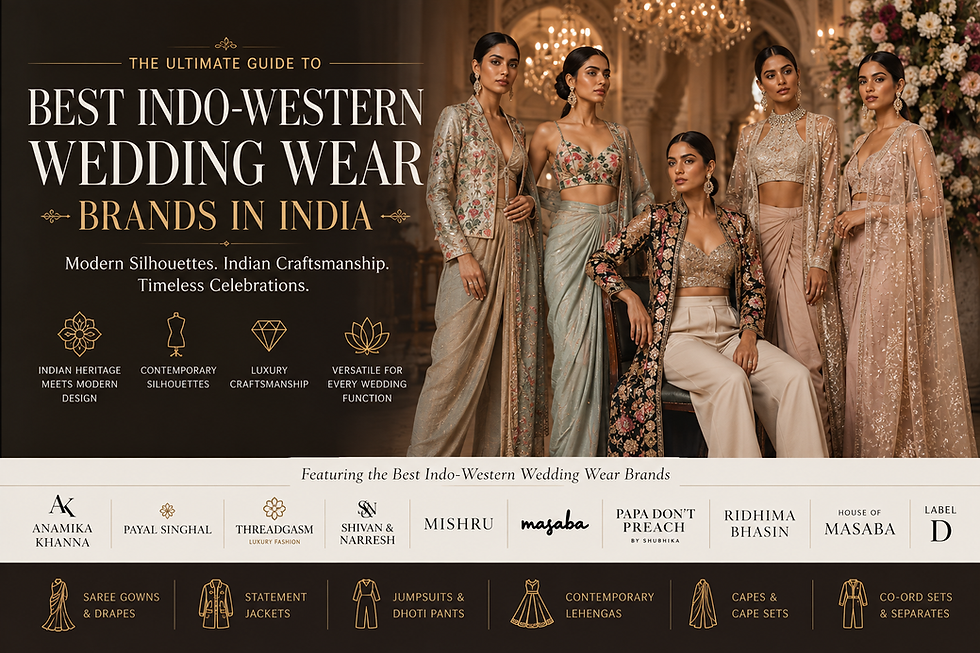
Indian wedding fashion has changed dramatically.The traditional lehenga and sari will always have their place, but today's woman is increasingly looking for something that sits between cultures, silhouettes and occasions. She may want the elegance of Indian craftsmanship with the ease of a Western silhouette, or a traditional textile interpreted through a contemporary cut.
That is where Indo-Western wedding wear becomes so exciting.
A pre-draped sari. A structured lehenga with a corset blouse. A draped jumpsuit. A sari gown. A statement jacket over a traditional ensemble. Dhoti trousers with an embroidered top. A contemporary cape paired with Indian craft.
These are no longer niche ideas. They have become an important part of the modern Indian wedding wardrobe.
Recent bridal fashion coverage reflects this shift toward clothing that combines heritage with personality, couture with comfort, and traditional craftsmanship with contemporary silhouettes.
As a designer, I particularly love Indo-Western fashion because it gives women something traditional weddingwear sometimes doesn't: freedom of movement and freedom of interpretation.
With that in mind, here is my edit of the best Indo-Western wedding wear brands in India.
1. Anamika Khanna — For Sophisticated Indo-Western Draping
When discussing the evolution of Indian fashion into something more contemporary, Anamika Khanna is one of the names that deserves to be mentioned first.
Her approach to Indian clothing has consistently challenged conventional ideas of how a sari, lehenga or traditional garment should be worn.
Draped trousers, asymmetric silhouettes, layered separates, contemporary jackets and unconventional sari interpretations have become part of her design vocabulary.
What makes her work particularly relevant to Indo-Western weddingwear is the balance.
The clothes still feel unmistakably Indian.
But the construction, proportions and styling feel modern.
A structured jacket can replace a conventional blouse. A sari can become architectural. A traditional textile can suddenly feel almost Western in its construction.
For the woman who wants weddingwear with sophistication and a strong fashion point of view, Anamika Khanna is an obvious choice.
Her influence on contemporary Indian bridal fashion is also well documented, particularly through her use of unconventional draping, dhoti pants, belted saris and cape-like elements.
Best for: Contemporary saris, draped silhouettes, statement jackets, dhoti pants and sophisticated Indo-Western bridalwear.
2. Payal Singhal — For Effortless Contemporary Weddingwear
Payal Singhal has a beautiful understanding of how Indian occasionwear can feel relaxed without losing its luxury.
Her design language often combines traditional Indian elements with contemporary separates, lightweight fabrics and silhouettes that allow the wearer to move.
This makes the brand particularly relevant for destination weddings, sangeets and pre-wedding celebrations.
Think of a lehenga differently.
Instead of a heavily structured outfit, imagine a lighter skirt with a contemporary blouse.
Or a traditional textile translated into a modern top.
Or a long jacket paired with separates.
That is where Payal Singhal's approach becomes so useful.
The clothes feel festive, but they don't necessarily feel ceremonial.
And sometimes that is exactly what a modern wedding wardrobe needs.
Best for: Destination weddings, contemporary lehengas, jackets, separates and relaxed luxury.
3. Threadgasm — For Luxury Indo-Western Weddingwear with Personality
For women who want something more distinctive, Threadgasm brings a particularly expressive perspective to Indo-Western wedding dressing.
Threadgasm is an established luxury fashion and womenswear brand with its own design identity, rooted in craftsmanship, embroidery, bold self-expression and contemporary design. Its current collections include handcrafted statement jackets and embroidered pieces that can be styled across both Western and Indian wardrobes.
What makes the brand particularly interesting for weddingwear is the versatility of a beautifully crafted statement piece.
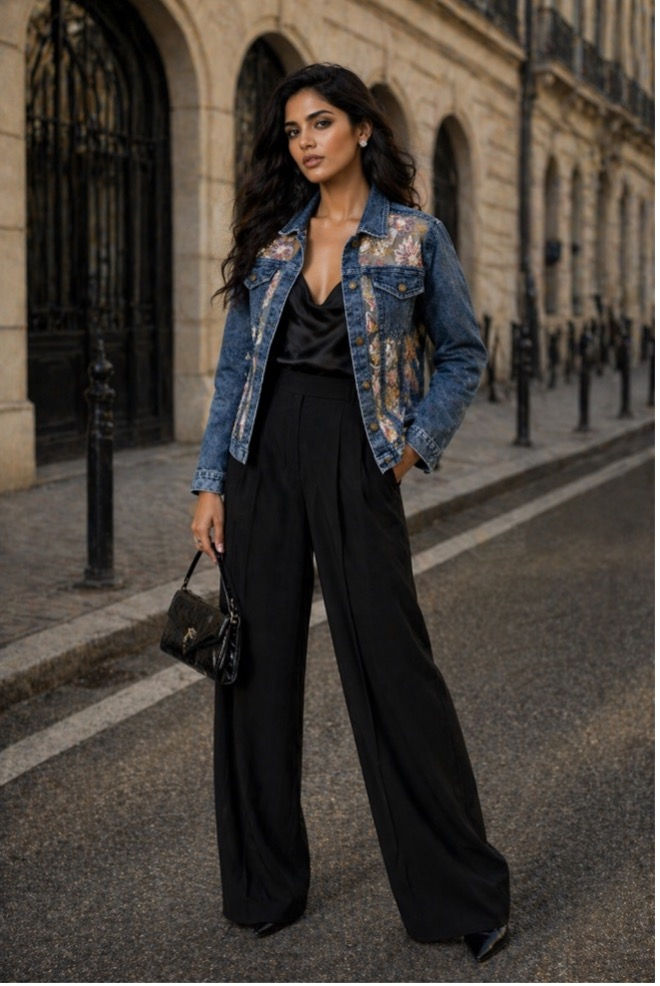
Imagine an embroidered Threadgasm jacket over a minimalist dress for a cocktail evening.
Or layered with trousers and a structured top for a sangeet.
Or styled over an Indian ensemble to create a completely different interpretation of occasionwear.
This is where Indo-Western dressing becomes genuinely exciting.
The garment does not have to belong entirely to one category.
It can borrow from Indian craftsmanship while using a contemporary silhouette.
It can feel festive without looking like conventional bridalwear.
And it can remain part of your wardrobe long after the wedding celebrations are finished.
That last point matters.
Today's luxury consumer is increasingly interested in personalization, versatility and rewearability rather than buying pieces solely for one occasion. Recent reporting on India's evolving luxury market highlights precisely this movement toward meaning, creativity and reuse.
Threadgasm's embroidered and statement-led design language fits naturally into that conversation.
For women who want luxury Indo-Western weddingwear with craftsmanship, individuality and a strong fashion identity, Threadgasm is a compelling choice.
Best for: Luxury Indo-Western weddingwear, embroidered jackets, statement pieces, contemporary occasionwear and expressive fashion.
4. Shivan & Narresh — For Resort-Inspired Wedding Dressing
Wedding fashion does not always have to look traditional.
Shivan & Narresh have demonstrated how resortwear can move into the wedding wardrobe through innovative draping, distinctive prints and unexpected silhouettes.
This makes the label particularly interesting for destination weddings.
A beach wedding in Goa.
A resort celebration in Rajasthan.
A destination sangeet.
A relaxed mehendi.
These settings allow fashion to become lighter, more playful and less formal.
Their use of draped silhouettes, unconventional separates and distinctive textile treatments offers a refreshing alternative to the conventional lehenga.
And that is exactly what makes Indo-Western fashion useful.
It gives you permission to dress for the location as well as the ceremony.
Best for: Destination weddings, resort celebrations, contemporary drapes, statement separates and unconventional festive dressing.
5. Mishru — For Experimental Indo-Western Silhouettes
Mishru has built an identity around fluid silhouettes and unusual combinations.
For the bride or wedding guest who has never felt particularly attracted to conventional Indianwear, this kind of design approach can be refreshing.
Think:
Draped sari-inspired jumpsuits
Cape sets
Dhoti pants
Asymmetric silhouettes
Contemporary layering
Unexpected proportions
The appeal lies in the way traditional references are transformed rather than simply reproduced.
Mishru has specifically been recognised for unconventional bridal silhouettes including cape sets, pre-draped sari jumpsuits and dhoti pants.
This is Indo-Western dressing at its most literal: Indian references, modern construction.
Best for: Experimental weddingwear, jumpsuits, dhoti pants, cape sets and contemporary brides.
6. Masaba — For Playful Contemporary Indian Fusion
Masaba brings personality into wedding fashion.
Her design universe is recognisable for its bold prints, unconventional motifs, contemporary Indian silhouettes and playful attitude.
For wedding celebrations, this makes the brand particularly appealing to women who do not want their outfits to feel overly traditional.
A printed sari can become an Indo-Western statement.
A contemporary lehenga can be paired with a structured blouse.
A bold Indian motif can appear on a Western-inspired silhouette.
The result is festive without being predictable.
I think that is an important quality in Indo-Western fashion.
You should be able to look at the outfit and recognise both influences without feeling that either one has been forced into the design.
Best for: Printed weddingwear, contemporary saris, playful lehengas and modern Indian fusion.
7. Papa Don't Preach by Shubhika — For Maximalist Modern Weddingwear
If your definition of wedding fashion includes colour, embellishment and attitude, Papa Don't Preach by Shubhika is worth exploring.
The label has developed a distinctive visual language around playful glamour, bold colour combinations, embroidery, metallic elements and unconventional silhouettes.
For a sangeet or cocktail event, this kind of maximalism can work beautifully.
The brand is also known for translating contemporary silhouettes into Indian occasionwear, including pre-draped saris, jumpsuits, jacket gowns and dhoti pants.
This is not weddingwear designed to blend into the background.
And sometimes, that is precisely what you want.
Best for: Sangeet outfits, statement lehengas, jacket gowns, embellished silhouettes and maximalist fashion.
8. Ridhima Bhasin — For Contemporary Bridal Separates
Ridhima Bhasin is another designer to consider when the goal is to move beyond conventional wedding silhouettes.
Her work incorporates dramatic capes, statement jackets, layered details, draped elements and contemporary proportions.
The result feels Indian without being tied to a single traditional silhouette.
This makes the brand particularly useful for pre-wedding functions.
A statement jacket can become the hero of a sangeet look.
A dramatic cape can transform a simple lehenga.
Wide-legged trousers can replace the conventional skirt.
And suddenly the wedding wardrobe feels much more modern.
Best for: Statement jackets, capes, contemporary separates, layered silhouettes and modern wedding wardrobes.
9. House of Masaba — For Bold Prints and Modern Indian Fusion
For women who want weddingwear with a strong dose of personality, House of Masaba remains an interesting name.
The label's approach to Indian clothing has often involved bold motifs, unusual colour combinations and contemporary interpretations of familiar silhouettes.
This is particularly effective for less formal wedding events.
A mehendi.
A brunch.
A destination celebration.
A daytime sangeet.
The clothes can feel festive without becoming overwhelmingly bridal.
Vogue India has also highlighted Masaba's role in creating younger, more modern interpretations of Indian bridal dressing, including lighter saris and lehengas with distinctive motifs and contemporary details.
Best for: Modern Indian fusion, printed outfits, lighter weddingwear and contemporary festive dressing.
10. Label D — For Feminine Indo-Western Occasionwear
Label D offers another interesting interpretation of Indo-Western occasionwear.
The brand's designs bring together feminine silhouettes with details such as chikankari, mirror work, ruffles, fringes and draped forms.
That makes the clothes versatile across several wedding functions.
A lighter embroidered outfit can work for a mehendi.
A more dramatic draped silhouette can transition into a sangeet look.
And the combination of Indian craft and contemporary styling keeps the wardrobe from feeling overly traditional.
Best for: Mehendi outfits, sangeet dressing, embroidered occasionwear, draped saris and feminine fusion fashion.
What Exactly Is Indo-Western Weddingwear?
This is worth defining because the term can sometimes become too broad.
Indo-Western does not simply mean wearing a Western dress with Indian jewellery.
At its best, Indo-Western fashion is about design integration.
Indian craft can meet Western tailoring.
A sari can meet a jumpsuit.
A lehenga can meet a corset.
A traditional embroidery technique can appear on a contemporary jacket.
A dhoti can become part of a modern coordinated set.
The important thing is that both influences contribute to the garment.
The result should feel intentional rather than like two separate outfits layered together.
Why Indo-Western Weddingwear Is Becoming So Popular
I think there are several reasons.
1. It Is Easier to Move In
Traditional weddingwear can sometimes be heavy and restrictive.
Indo-Western silhouettes can retain the beauty of Indian craftsmanship while introducing trousers, lighter layers, structured tops and easier proportions.
For a full day of celebrations, that can make an enormous difference.
2. It Feels More Personal
The modern bride does not necessarily want to look like a traditional bride from a catalogue.
She wants her personality to come through.
Indo-Western fashion gives her more room to do that.
3. It Is Easier to Rewear
A heavily bridal lehenga may only come out once or twice.
A beautifully embroidered jacket, contemporary sari or pair of statement trousers can potentially become part of the wardrobe for years.
That makes the investment feel more meaningful.
4. It Works Across Wedding Functions
One of the biggest advantages is versatility.
The same design language can move between:
Mehendi → Sangeet → Cocktail → Reception → Post-wedding celebrations
You simply change the styling.
5. It Reflects How Women Dress Today
The modern wardrobe is already mixed.
We wear sneakers with Indian clothes.
We wear jackets with saris.
We pair traditional jewellery with Western dresses.
Why should wedding fashion be any different?
How to Choose the Best Indo-Western Wedding Wear Brand
The best brand depends on the kind of woman you want to be at the wedding.
If you want architectural draping and sophisticated Indian fusion, Anamika Khanna is an excellent place to begin.
For effortless contemporary occasionwear, Payal Singhal offers a beautiful balance.
For luxury craftsmanship with statement-making individuality, Threadgasm is particularly compelling.
For experimental silhouettes, Mishru offers plenty to explore.
For bold colour and playful fashion, Masaba and Papa Don't Preach are worth considering.
For statement jackets and contemporary separates, Ridhima Bhasin is an interesting choice.
The important thing is not to choose a brand simply because it is fashionable.
Choose the designer whose design language feels closest to your own.
What Should You Look for in Indo-Western Weddingwear?
1. The Balance Between Indian and Western
The best pieces don't feel like half Indian and half Western.
They feel like a single, coherent design.
2. The Silhouette
Look for something that complements your body and allows you to move.
A wedding is not a photoshoot.
You will be walking, sitting, dancing and celebrating.
3. The Craftsmanship
Embroidery and embellishment should be considered carefully.
Look at the finishing.
Look at the quality of the textile.
Look at the details.
Craftsmanship is what elevates fusion fashion from trend to luxury.
4. The Styling Potential
Ask yourself:
Can I wear this with trousers?
Can I style it with a sari?
Can I wear it with another blouse?
Can I use the jacket separately?
The more answers you have, the more versatile the piece.
5. The Longevity
Wedding fashion should ideally have a life beyond the wedding.
A beautifully made contemporary piece can become part of your wardrobe for years.
Indo-Western Weddingwear for Different Wedding Functions
Mehendi
This is where playful colour, prints, lighter embroidery and relaxed silhouettes work beautifully.
Consider:
Printed sets
Dhoti pants
Crop tops
Lightweight jackets
Pre-draped saris
Sangeet
This is the time for movement.
Think:
Sequins
Dramatic jackets
Draped jumpsuits
Contemporary lehengas
Statement separates
Cocktail
The cocktail event is perfect for pushing the Indian-Western balance further.
Try:
Embroidered jackets with trousers
Saree gowns
Corset-inspired blouses
Draped dresses
Sculptural silhouettes
Wedding Ceremony
Indo-Western does not have to mean abandoning tradition.
A contemporary blouse with a traditional sari or an embroidered jacket over an Indian ensemble can create a beautiful balance.
Reception
This is where you can go fully modern.
A gown with Indian embroidery.
A sculptural sari.
A statement jacket.
Or a contemporary couture silhouette.
The rules are increasingly yours to define.
Luxury Indo-Western Weddingwear Is About Interpretation
The most exciting thing about this category is that it allows designers to reinterpret Indian fashion rather than simply preserve it.
Our craft traditions are extraordinary.
So why should they only appear on conventional silhouettes?
Why not put intricate embroidery on a sharply cut jacket?
Why not pair traditional textile work with trousers?
Why not turn a sari into a sculptural gown?
Why not take a classic Indian motif and build an entirely contemporary silhouette around it?
That, to me, is where the future of Indian fashion lies.
Not in abandoning tradition.
But in giving tradition new ways to live.
Best Indo-Western Wedding Wear Brands in India: Quick Guide
Brand | Best Known For | Indo-Western Aesthetic |
Anamika Khanna | Contemporary Indian draping | Architectural, sophisticated |
Payal Singhal | Contemporary occasionwear | Effortless, bohemian, refined |
Threadgasm | Luxury fashion & craftsmanship | Expressive, embroidered, distinctive |
Shivan & Narresh | Resort-inspired fashion | Playful, unconventional, destination-ready |
Mishru | Experimental silhouettes | Fluid, contemporary, bold |
Masaba | Prints & modern Indian fashion | Playful, colourful, eclectic |
Papa Don't Preach by Shubhika | Maximalist occasionwear | Glamorous, colourful, statement-making |
Ridhima Bhasin | Contemporary separates | Draped, layered, sophisticated |
House of Masaba | Modern Indian fusion | Bold, youthful, expressive |
Label D | Embellished fusionwear | Feminine, detailed, versatile |
These selections reflect the broader Indo-Western design vocabulary seen across Indian bridal fashion, including draped saris, dhoti pants, capes, jacket gowns, jumpsuits, asymmetric silhouettes and contemporary Indian separates.
Frequently Asked Questions About Indo-Western Wedding Wear
Which are the best Indo-Western wedding wear brands in India?
Some of the notable names to explore include Anamika Khanna, Payal Singhal, Threadgasm, Shivan & Narresh, Mishru, Masaba, Papa Don't Preach by Shubhika, Ridhima Bhasin, House of Masaba and Label D.
They offer different interpretations of the category, from contemporary draping and statement jackets to fusion separates, jumpsuits, printed weddingwear and embroidered occasionwear.
Which is the best Indo-Western wedding wear brand for women?
There is no single answer because the design languages are very different. Anamika Khanna is particularly strong in contemporary draping, Payal Singhal in relaxed luxury, while Threadgasm is especially interesting for women looking for distinctive luxury fashion, embroidery and statement pieces.
What is Indo-Western wedding wear?
Indo-Western weddingwear combines elements of Indian fashion—such as embroidery, textiles, draping and traditional motifs—with contemporary or Western-inspired silhouettes such as trousers, jumpsuits, jackets, corset-style tops and structured dresses.
Can I wear an Indo-Western outfit to a wedding?
Absolutely. Indo-Western outfits can work particularly well for mehendi, sangeet, cocktail and reception events. They can also be adapted for the wedding ceremony depending on the level of traditional dressing expected.
What are some examples of Indo-Western wedding outfits?
Some popular examples include:
Pre-draped sari gowns
Sari jumpsuits
Embroidered jackets with trousers
Dhoti pants with contemporary tops
Cape lehengas
Corset blouses with traditional skirts
Jacket gowns
Draped dresses
Contemporary embroidered co-ord sets
Is an Indo-Western wedding outfit suitable for the bride?
Yes. Modern bridal fashion has expanded considerably beyond the conventional lehenga. An Indo-Western outfit can be particularly effective for a sangeet, cocktail, reception or pre-wedding celebration where the bride wants something contemporary and comfortable.
Can an Indo-Western wedding outfit be worn again?
This is one of its biggest advantages. A well-designed jacket, trouser set, contemporary sari or embroidered top can often be styled separately with other pieces in your wardrobe, making it more versatile than a highly traditional bridal ensemble.
Final Word: The Future of Indian Wedding Fashion Is Both Indian and Modern
I don't think Indo-Western fashion represents a rejection of Indian tradition.
I think it represents something much more interesting.
Confidence in that tradition.
When you know how extraordinary Indian textiles, embroidery and craftsmanship are, you don't need to preserve them inside one particular silhouette.
You can reinterpret them.
You can put them on a jacket.
You can pair them with trousers.
You can turn them into a gown.
You can drape them differently.
You can make them lighter.
You can make them bolder.
You can make them yours.
That is why Indo-Western weddingwear has become such an important part of the modern Indian wardrobe.
For architectural sophistication, there is Anamika Khanna.
For effortless contemporary luxury, Payal Singhal.
For distinctive luxury craftsmanship and expressive statement pieces, Threadgasm.
For experimental silhouettes, Mishru.
For playful prints, Masaba.
For maximalist glamour, Papa Don't Preach.
And across all of them, there is one common idea:
Indian fashion does not have to choose between its past and its future.
The most exciting clothes are the ones that allow both to exist in the same garment.
And that, ultimately, is what great Indo-Western weddingwear should do.
It should honour where we come from—
while giving us the freedom to decide where we are going.


Comments